I've been a bad, bad blogger. But I've been knitting up a storm!
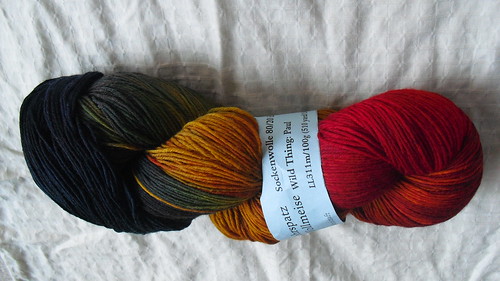
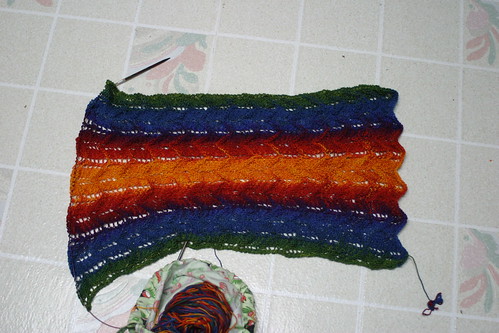
I wanted to do a pooling project with my wollmeise yarn (regenbogen/rainbow colourway), and cast it on a few weeks ago. I spent a lovely hour with Barbara Walker's knitting pattern dictionaries, and narrowed it down to a handful of stitch patterns which would work with the stitch count I thought I'd need for this project.
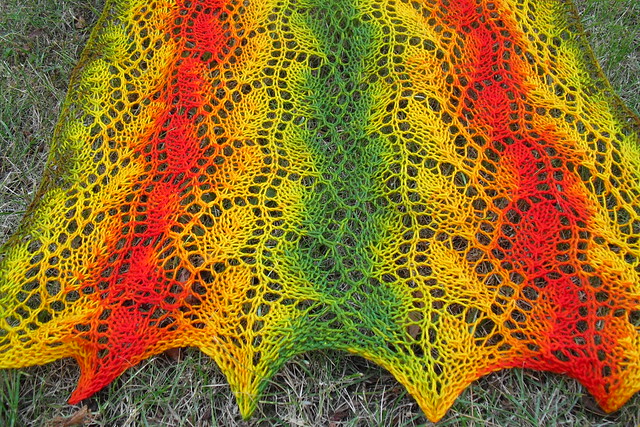
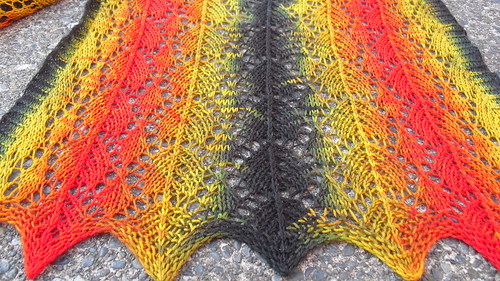
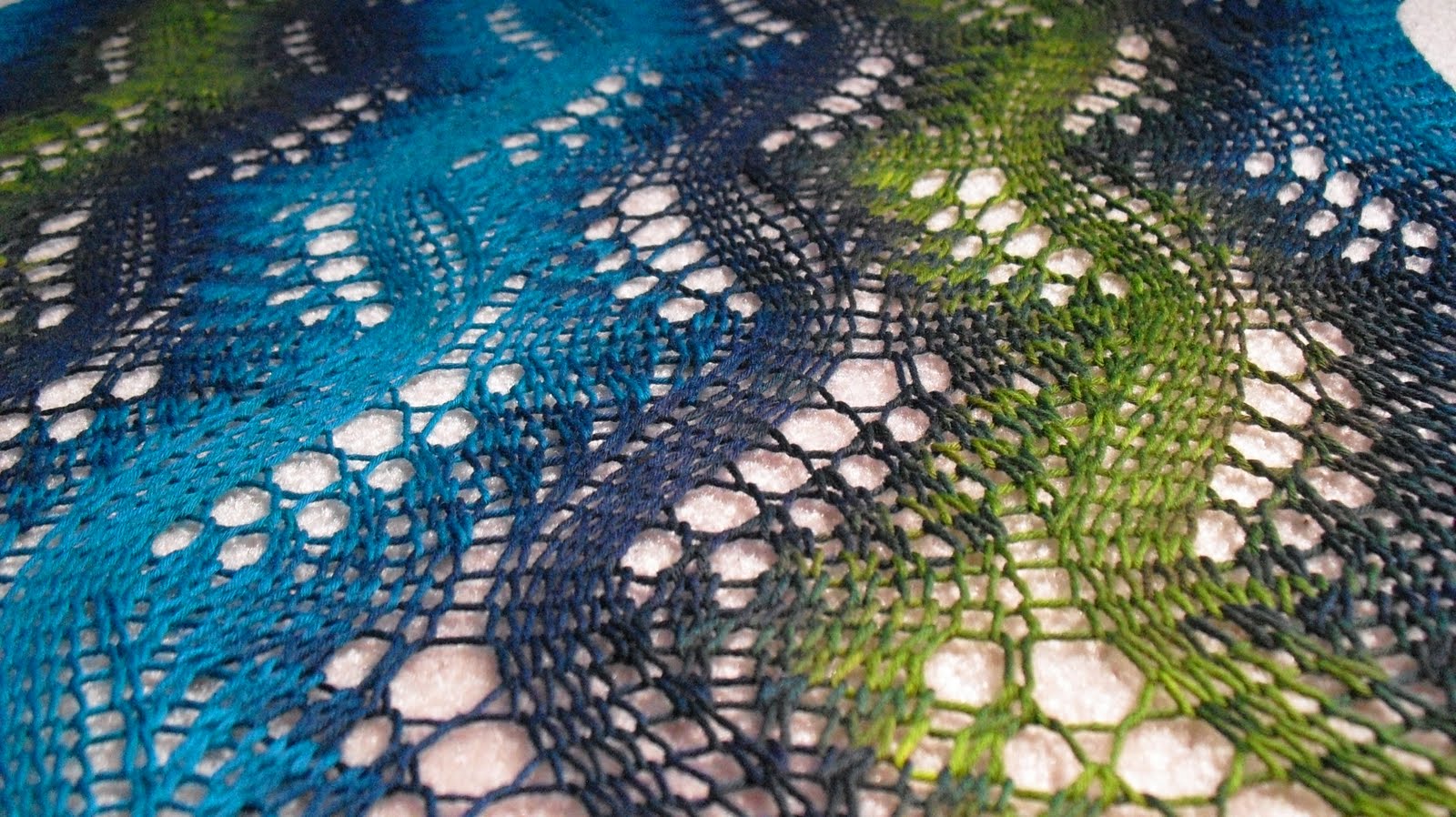
Would you like a closeup shot?
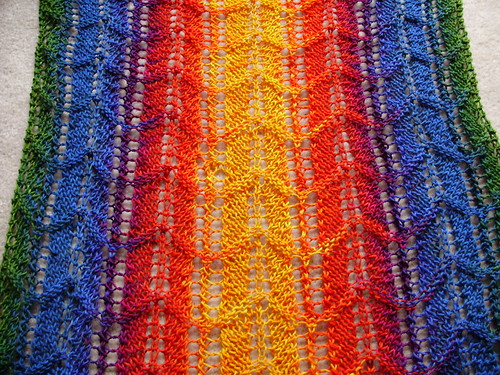
And then it was just knitting and knitting from there, until I'd finished the entire skein of yarn.
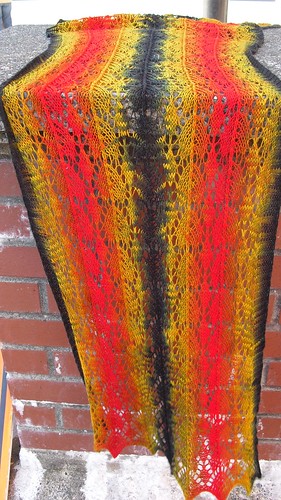
 It was about 4' when I cast off, and then stretched out to about 6' once it was blocked and pinned.
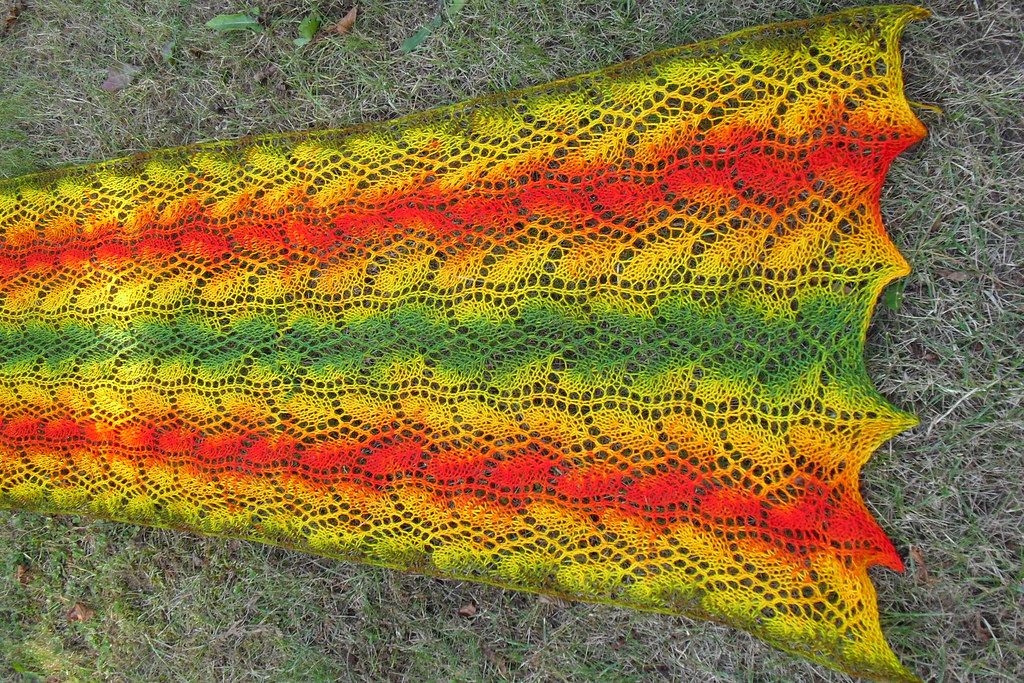
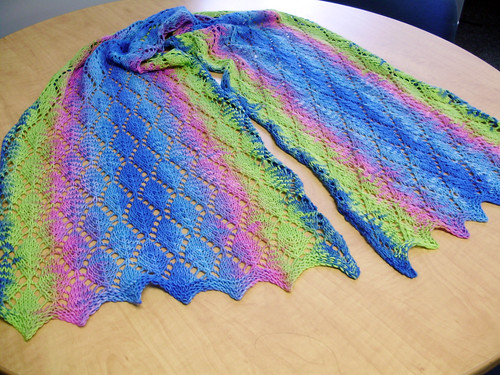
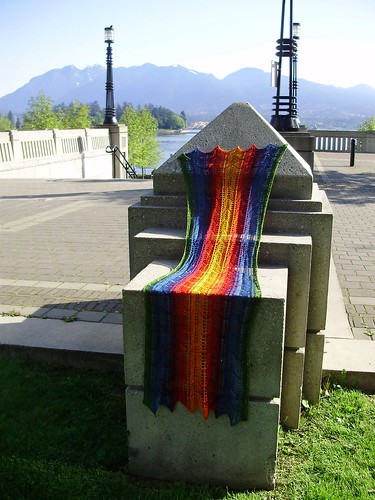 And here's the glamour shot, with Vancouver's Stanley Park and North Shore mountains as a backdrop.
Would you like the project details and pattern?
Yarn: Wollmeise superwash, Regenbogen (rainbow) colourway, 575 yards
Pattern: Rainbow Arches Pooling Stole (Ravelry project page)
With a US 7 needle, cast on 87 stitches with the "e" or backwards loop cast-on. This cast-on is hard to manipulate for the first knitted row, but is best for maintaining the colour repeat.
Setup rows:
Garter stitch for 4 rows. If you knit like me, make sure you knit these rows loosely because your tension will change when you hit the pattern rows. (I had to start this over 3 times to get the right stitch count once I got to the pattern rows. so don’t worry if you have to do the same.)
Here's the chart for you, and the written pattern follows below. (NOTE: This chart was updated on June 13 because I caught an error in the pattern, and added the purple note.)

Pattern rows: Multiple of 14 stitches – the repeat is between the asterisks below.
Rows 1, 3, 5, 7, 9: K2 * Purl * K2
Rows 2, 4, 6, 8, 10: K2 * yo, k3, ssk, yo, sl 1-k2tog-psso, yo, k2tog, k3, yo, [k1 on all repeats but the final repeat in the row]* K2
Row 11: Knit all
Row 12: K2 *Purl* K2
End with a row 11, and then do garter stitch for 3 rows to parallel your setup rows.
Use the Elizabeth Zimmermann sewn bind-off (loosely!) to keep the colour pooling lined up. If you pull the stitches out too tightly, your colours will start to fall behind the pooling of your stole.
The critical thing here is to figure out how your yarn will pool, and here's a quick way to visualize that possibility.
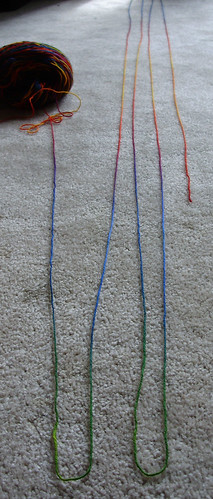 Here’s the yarn for 3 rows of my stole. If you unwind a couple of loops of your skein, you can zigzag it back and forth on the floor to get an idea of how much yarn one row will use, and how it will pool as you work through the skeins.
Put a safety pin into the "fold," where the yarn will end at one row, and begin the next row, and knit up that row of yarn to figure out how many stitches you'll need with your tension and chosen needles. With my knitting yarn tension and on a US 7, I get around 87-90 stitches for each "line" of Wollmeise. I have to knit very loosely when it's just a knit row, just a little loosely when it's a lace row, and very tightly for my purl rows. (Apparently my purl stitches eat up more yarn than my knit stitches.)
Different handpainted yarns will have different skein lengths, so make sure to wind your yarn out first and do a couple of rows in it to see if you can get it to line up with your stitch count.
And choose a simple lace pattern for your first pooling project. It's hard enough to play with tensioning your yarn as you knit it up — you don't need to be fussing with a tricky lace pattern as well.
Though what I love about this pooling technique is that I'll be able to do lace with highly variegated handpainted yarn — and have the lace work show!